Airport Management

Every 5 seconds, a flight takes off using Flightscape software.



Airport Management
Flightscape’s Airport Management suite includes modular, scalable software solutions designed to integrate seamlessly and support future growth.
Gate Plus
An end-to-end Integrated and Unified solution to power decision making across gate management
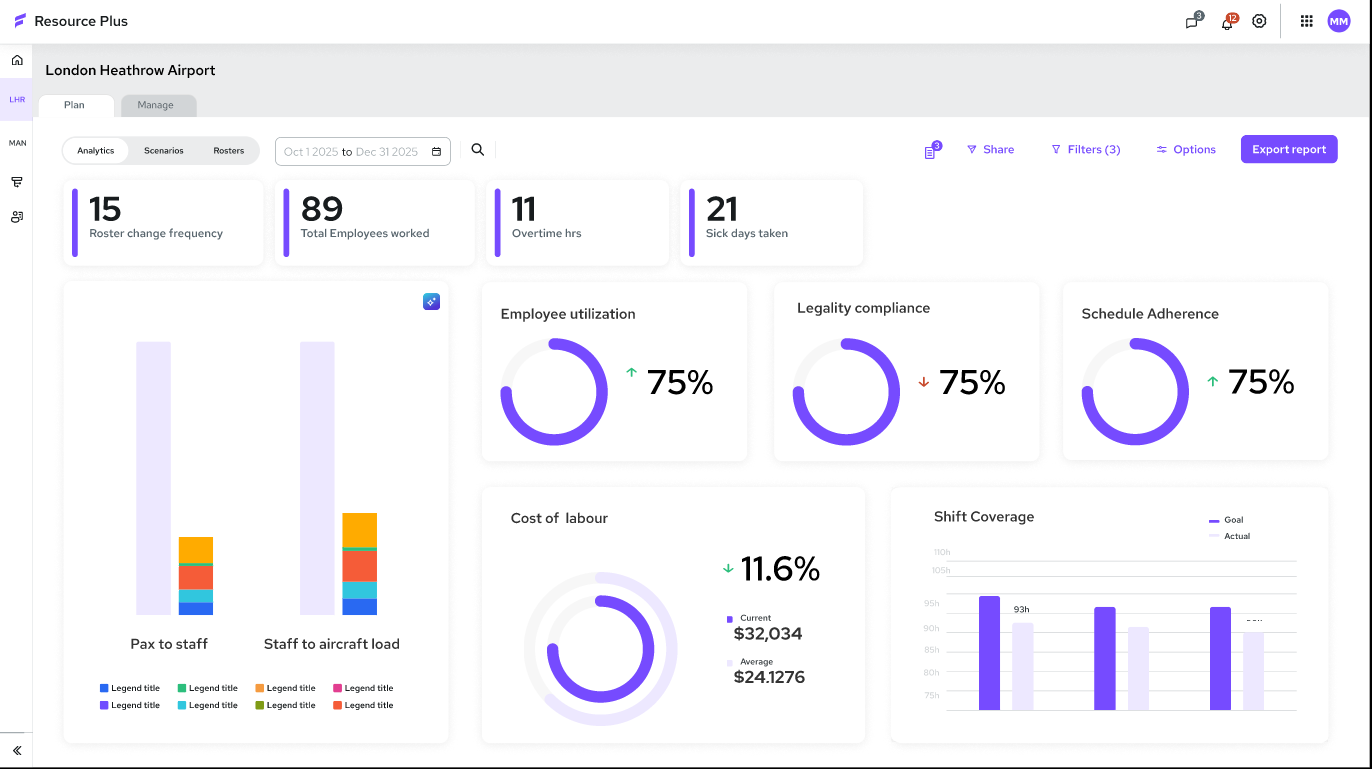
Resource Plus
Industry-leading cost savings through multi-variable, dynamic cost analysis and trajectory optimization


Why Flightscape
Key Features

Frequently Asked Questions
By optimizing staffing and gate allocation, automating manage-by-exception workflows, and giving teams real-time visibility during disruptions. The result is fewer delays, better resource utilization, and stronger operational efficiency for airlines, especially during peak periods and irregular operations.
Yes. Flightscape's Airport Management software supports airline ground operations end-to-end, from forecasting and workforce planning to day-of-ops staffing adjustments, task assignment and gate decision support. This helps ensure the right people and equipment are positioned at the right time.
Optimization-based planning uses algorithms to create feasible, efficient plans under real constraints (skills, rules, demand, gate availability, and time windows). Manual planning can work at small scale, but optimization is typically required to sustain efficient aviation operations as complexity and disruption increase—while enabling faster what-if analysis when conditions change.
Airport Management teams commonly look for integration with flight schedules/updates, disruption and operational control systems, workforce and HR data, and downstream reporting tools. The goal is shared operational visibility so staffing, gates, and tasks reflect the same real-time operational picture. These integrations are all part of Flightscape's scalable, modular set of solutions, including Airport Management.
Frontline teams need current assignments, task instructions, and rapid communication without returning to a desk. Mobile execution reduces missed handoffs, improves adherence to plans, and supports operational efficiency in aviation by shortening response time during disruption.
Yes, modern airport management software is designed to scale across stations with different demand patterns, work rules, and operating constraints. This helps standardize processes while still allowing local operational control where required.
Implementation typically includes data integration, configuration of work rules and constraints, testing, and operational readiness (training and new processes). To accelerate value, prioritize a focused first rollout (e.g., one station or one operational area such as gates or staffing), then expand once the operating model is proven.
Most ROI models combine hard savings (reduced overtime, better staffing utilization, fewer gate conflicts, lower disruption-related cost) with service and performance benefits (improved on-time performance and passenger experience). The strongest cases tie improvements in operational efficiency in aviation to repeatable KPIs that finance and operations can jointly validate.

Make the shift to smarter skies
See how Flightscape helps you orchestrate airport operations with precision and perfect timing.

Book a demo
Customer-first. Every day.
The ICXA24 Bronze Award recognizes Flightscape’s customer‑first approach, from implementation through day‑to‑day operations, delivering reliable support and long‑term value for airlines.

Customer-first. Every day.
The ICXA24 Bronze Award recognizes Flightscape’s customer‑first approach, from implementation through day‑to‑day operations, delivering reliable support and long‑term value for airlines.